Customer Publication
Targeting SASP with FDA-approved agents: minoxidil and diazoxide as potential senomorphic agents in cancer therapy
Journal: Turkish Journal of Biochemistry (2025)
Research Areas: Cancer Research
Cell Lines: HeLa (human cervical carcinoma cells)
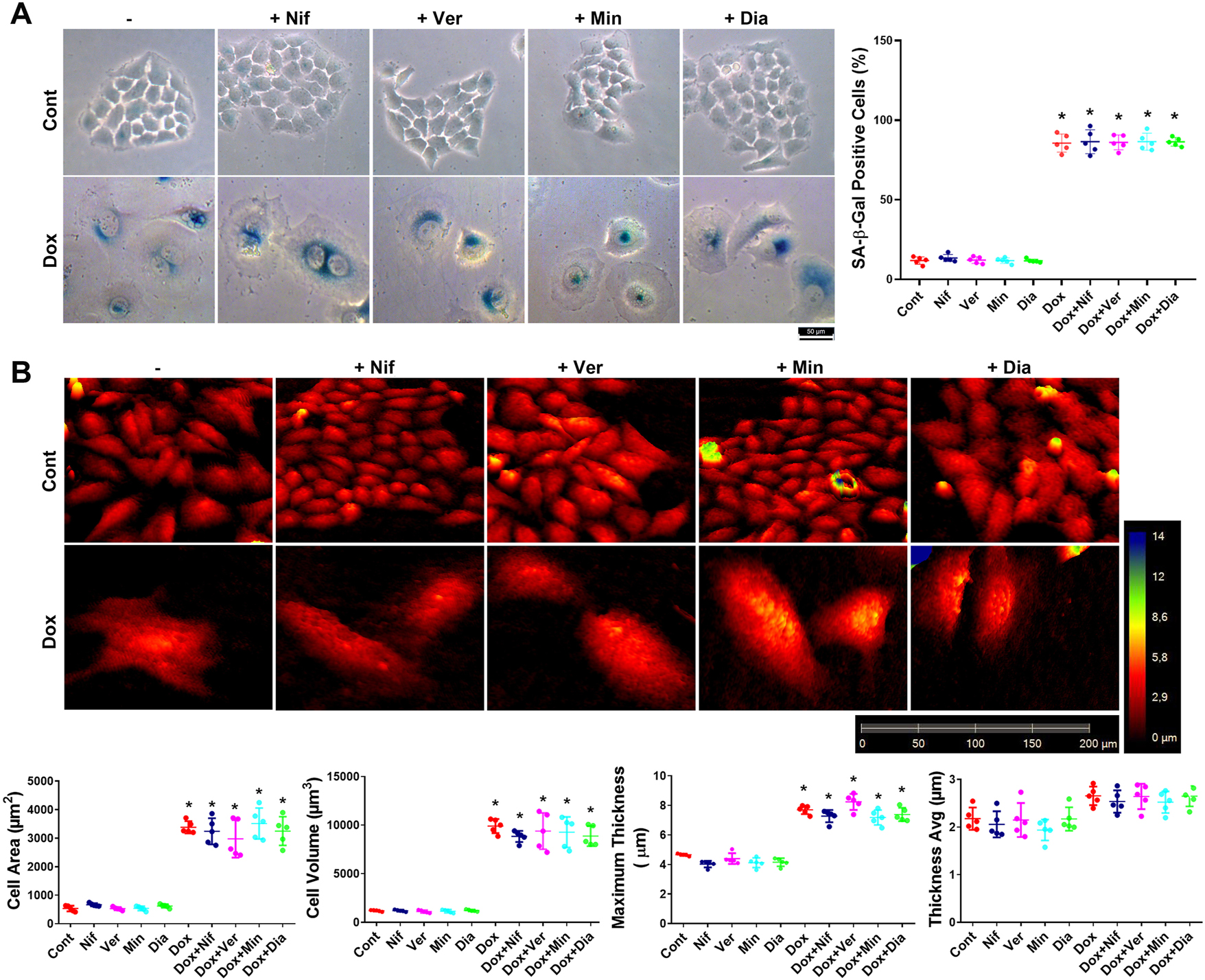
Summary: Chemotherapy-induced senescent cells are recognized to lead to cancer progression and resistance to treatment by releasing factors associated with the senescence-associated secretory phenotype (SASP). Therefore, targeting SASP via senomorphic agents is an emerging therapeutic strategy. In this study, they evaluated the potential of L-type Ca2+ channel blockers, nifedipine and verapamil, and K+ATP channel openers, minoxidil and diazoxide, to influence senescence development and SASP-related secretory activity. The findings indicate that neither L-type Ca2+ channel blockers, nifedipine and verapamil, nor K+ATP channel openers, minoxidil and diazoxide, influence the induction of senescence by doxorubicin or alter senescent cell morphology. The K+ATP channel openers minoxidil and diazoxide notably inhibit the secretion of the proinflammatory cytokine IL-6 and VEGF-A in senescent HeLa cells, implying potential senomorphic properties. Moreover, although minoxidil and diazoxide did not reduce the proliferative effects of SASP on cancer cells, these drugs modulated the secretory phenotype of senescent cells to reduce HeLa cell migration significantly.HoloMonitor was used to study the cell morphology change including cell volume, area, maximum thickness, and mean thickness.